
Seven
Homer Essay for 2026-05-21; No. 17.

Seven
Seven similes are repeated in the Iliad, and there are seven similes that are given in the Catalogue of Ships. Seven of Agamemnon’s 46 speeches are begun with him being stern, and because the number seven is very important in a variety of other places, we should take some time to think about time and the experience of the Homeric audience, which would have been able to reflect and think sincerely about the conjuring of sin on behalf of beauty that is the slaughter of Iphigenia at Aulis and the gathering of the ships before destiny and the epic nature of the human concretized, or the confiscation of the nomos in secrecy
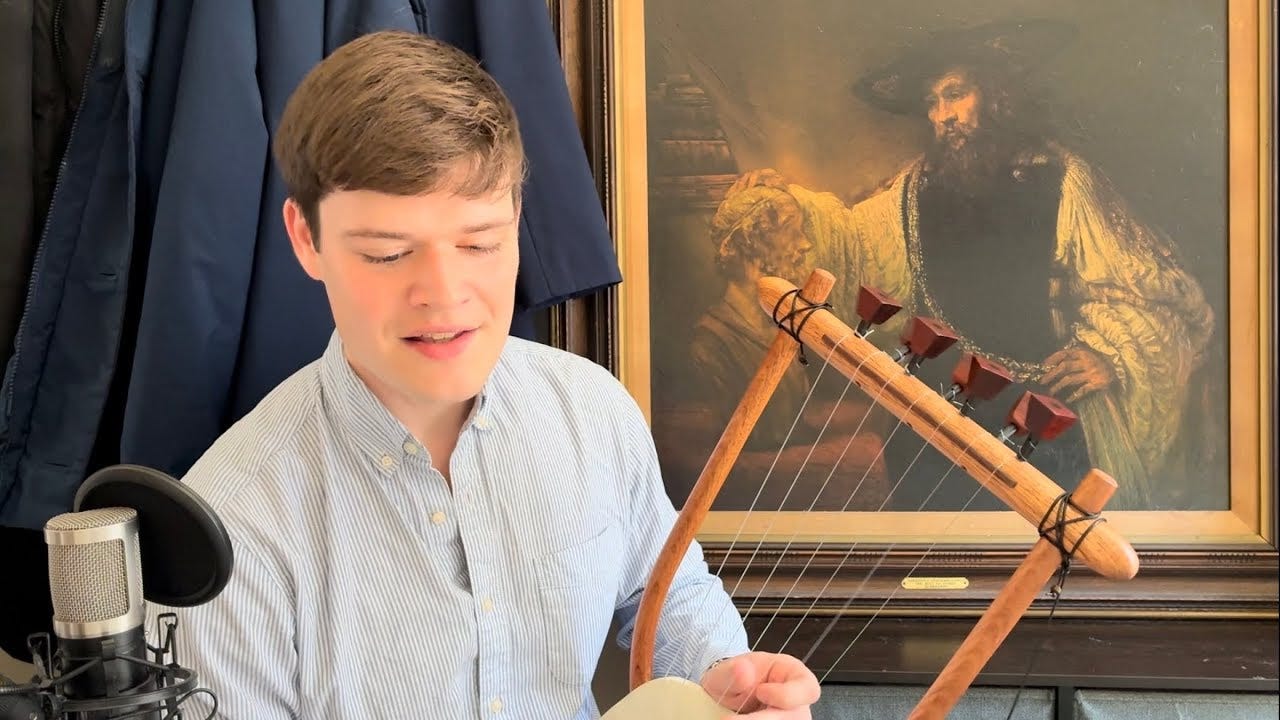
.
Considering the rational aspect of the trace from physicality to love and finally to mere thought and expression of cosmological certainty, it is worth entertaining the invocation of these seven similes in the Catalogue of Ships as a peroration before the truth is unveiled, which is that of Agamemnon himself. The similes in 2.455-83 are as follows: a fire in the distance; a flock of birds upon a plain; leaves and flowers in the spring; flies to milk in the spring; goatherds across different pastures; Agamemnon, who comes as Zeus, Ares, and Poseidon; and a bull, who is better than the rest of the herd (see Scott 2009, 49 for more analysis).
Each of them narrows and brings the lens of the fight and the aspect of Agamemnon, and by extension is brother and his wife, deeper into recognition by the listeners, and helps us understand more what happened to bring audience, hero, and singer together. It is perhaps easy to link the constructive metaphorization of lines of Homer with a quotidian link to the human, something that we may be edging away from these days, as my friend at Vice, Ben Ditto, writes about. But in a more profound and calling sense, I believe that what is interesting here is the recollection and insinuation of union and computation which the epic has us embrace to reform ourselves and become better and fuller versions of the heroes themselves, and in that performance discover divine music.
Of the seven repeated similes in the Iliad, there is one which is about Hector and Alexander, taking place at 6.506 and 15.263:
ὡς δ᾽ ὅτε τις στατὸς ἵππος ἀκοστήσας ἐπὶ φάτνῃ
δεσμὸν ἀπορρήξας θείῃ πεδίοιο κροαίνων
εἰωθὼς λούεσθαι ἐϋρρεῖος ποταμοῖο
κυδιόων: ὑψοῦ δὲ κάρη ἔχει, ἀμφὶ δὲ χαῖται
ὤμοις ἀΐσσονται: ὃ δ᾽ ἀγλαΐηφι πεποιθὼς
ῥίμφά ἑ γοῦνα φέρει μετά τ᾽ ἤθεα καὶ νομὸν ἵππων:
Iliad, 15.506-511
And as when a horse in place has gathered its energy by eating
And breaks through its bonds and speeds across the plain, galloping,
Appearing as one accustomed to ablution in the well-flowing waters of a river
And exulting, it holds its head high, and its hair leaps
About its neck, and it takes the world in its shining,
And its knees bear it speedily to the homes and pastures of mares:
Alexander is returning from having made love to Helen, and Hector is returning from the dead after being baptized by the water of the river and having the aegis shook over him. Both represent a similar process of rebirth and recognizance of epic purpose that formally diagnose the great catharsis necessary for connecting to the Homeric audience, which is taking seriously, sternly, the replication of the Basileus in his marching orders away from the woman, away from the darkness of unforgiving neglect and soldier’s malfeasance, as Hector describes in 6.521ff., and toward a future that is, or the turn against the Achaeans even given fate of death, because myths describe that which already is without naming it, a metaphor for the impotence of passion and the lower bounds of shield of Achilles without the great destiny above, between which are seven rings that describe the Epic world as we know it; and amongst the displacement of the listener’s recognition of the activities of great ocean and the constellations, which we can never truly understand, we are also at the limits of our circumstances as heroes and therefore find faith.
Where one can find and give faith is where one can provide love, and the role of the performer of the Iliad is to look deeply into what each of these lines really means and think of it like the secrecy of a perfect relief of a lifetime of wandering which comes over each man before they experience the Epic world. This is the failure of faith but with the reliance that their breath, their high-held head and their longing for Ethics and Laws is not misplaced, but merely given elsewhere and sufficed without strenuous Aches of Lions (Achilles) in the coming displacement of the wall (as Apollo promises before the simile is given in book 15, viz. technology) and the return of the greatest force humans can rely on, which is the shining persuasion and deep consideration given to the otherness of the aristocratic horse which goes from the physical to the spiritual to the rational in three lines and back down again, ἀκοστήσας (satisfied), δεσμὸν ἀπορρήξας (free from bondage), εἰωθὼς λούεσθαι (spiritually cleansed and seeing), κυδιόων ὑψοῦ (seeing and exulting on high), ἀγλαΐηφι πεποιθὼς (as an emissary of light in the spiritual) unto ἤθεα καὶ νομὸν (the land of the people), all in a grand effort to not only impress upon us the wickedness of betraying a curiosity for the end of world but also the hubris to think that one can ever understand the Epic world as anything but a whole embodiment of a tradition, given the distinctness of each of these words and how far they stray from their conventional Greek translations. This is part of what makes the simile so difficult to perform, since it crisscrosses our entire universe.
It is also why it is important to practice the simile and try to use it to help others, because the singer and the audience are well aware of the necessary turbulence that indicts the individual to certain causes, while an infinite of reflection of the short time of love that Alexander has with Helen is worth it all and more, and Agamemnon very Seriously and Sternly understands that the recapitulation of his promises and his brother’s union in virtue with him is worth more than anything but yet less than how flawless she is as a result of a gift from the other gods. This is why making beautiful things is good, since it allows the return to the ἤθεα καὶ νομὸν to not be a confiscation, but a proliferation and purposeful evangelization. It is why a good Homeric singer is both morally good and finds beautiful music.